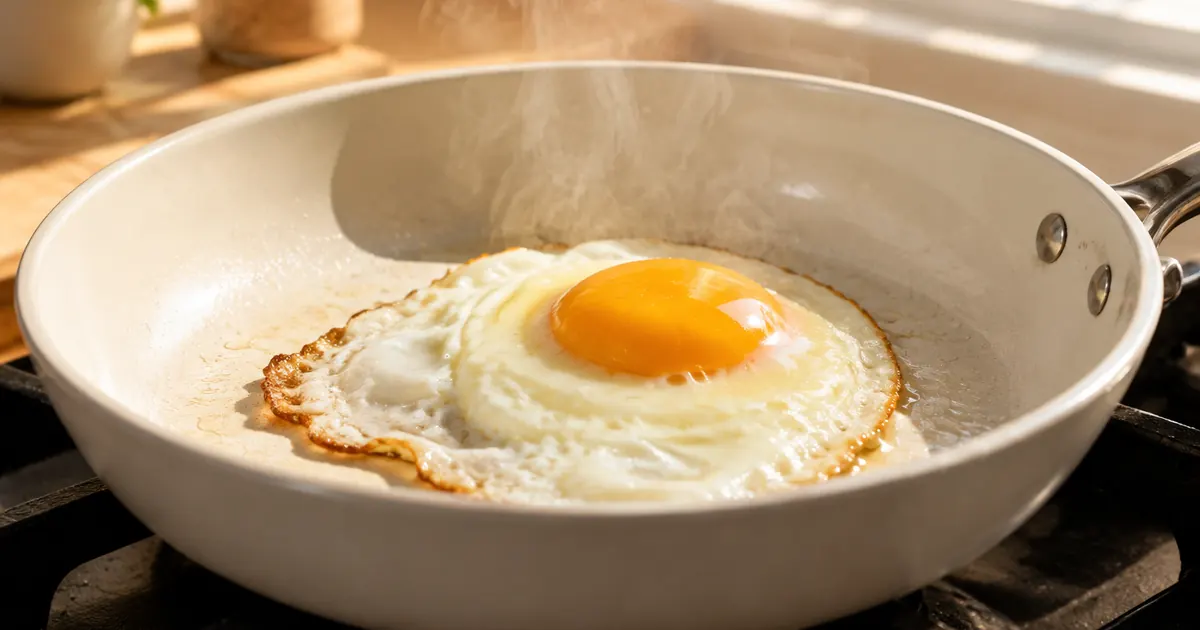
Ceramic nonstick cookware has a reputation problem, and it is earned: pans that slid eggs across the surface in March and glued them down by September. The failure is rarely the coating — it is the care routine that cheap cookware never explains. Ceramic coating fails from the top down, in predictable ways, and every one of them is preventable. This is the care guide that should ship in every box.
First: What Ceramic Coating Actually Is
Ceramic nonstick is not pottery — it is a sol-gel silica coating applied to aluminum. It is naturally slick without PFAS chemicals, which is both its selling point and its care requirement: the coating is harder than PTFE but less forgiving of abuse. Heat, spray oil, and thermal shock are the three enemies. Manage those three and the 10-Piece Ceramic Cookware Set performs for years; ignore them and every pan becomes a September story.
Heat: The Silent Killer
The rule that matters most: never preheat an empty ceramic pan on high. Empty pans on high heat exceed the coating's tolerance in about ninety seconds, and the damage is cumulative and invisible — the surface slowly loses its release. Medium heat covers nearly every home cooking task, and ceramic's aluminum body heats fast enough that medium performs like high. If a recipe demands screaming heat, a stainless or cast-iron pan is the right tool; ceramic is the egg-and-fish specialist.
The spray oil warning
Cooking spray is the fastest way to kill ceramic coating. The propellants polymerize on the surface at heat, building a sticky amber film that no sponge removes. Use a drizzle of olive or avocado oil from the bottle — a teaspoon, applied to the pan or the food — and the surface stays slick for years.
Utensils: The One-Weekend Mistake
Metal utensils scratch ceramic in one absent-minded weekend. Silicone, wood, and nylon cost the same as one takeout order and protect a ten-piece set. The set's glass lids are the other fragile citizen: hand wash them, and never move a hot lid from stove to sink.
Cleaning: Warm Pan, Warm Water
The routine is short. Let the pan cool until warm, wash with a soft sponge and dish soap, dry immediately. The thermal shock of cold water on a hot pan warps the base and micro-cracks the coating — the pan still works that night and sticks forever after. For the occasional sticky residue, a paste of baking soda and water simmered gently for five minutes lifts it without abrasion.
Reviving a Tired Pan
When release degrades — usually from spray oil or high heat — the revival routine works more often than not: wash thoroughly, sprinkle baking soda, add enough water to cover the residue, and simmer five minutes. Cool, wipe, and rinse. If a faint film remains, a melamine sponge finishes it. This restores genuine ceramic coating in most cases; what it cannot fix is a coating that fluted or flaked, which is a replacement, not a revival.
The Care Card, Compressed
- Medium heat always; never preheat empty on high.
- Oil from the bottle, never spray.
- Silicone and wood utensils only.
- Cool pan before washing; warm water, soft sponge.
- Hand wash the lids; oven-safe to the temperature on the page.
What Ceramic Does Well: The Honest List
Ceramic nonstick is the right tool for a specific kitchen: eggs of every style, fish with delicate skin, pancakes, and the low-to-medium-heat weeknight cooking that fills most calendars. It is PTFE-free, which matters to many households, and its release when new is genuinely spectacular. What it is not: a searing pan for steaks (stainless or cast iron wins), a high-heat wok, or a campfire tool. The ten-piece set works as a complete kitchen when paired with one cast-iron skillet for the high-heat jobs — together they cover everything, honestly.
Storage: The Detail That Adds Years
Ceramic coatings scratch in the cabinet as easily as in the pan — nested pans grind their rims against each other's cooking surfaces. Two cheap fixes: a paper towel or pan protector between nested pieces, and hanging or open-shelf storage for the everyday pans. Thirty seconds of care at put-away, and the coating that would have lasted three years lasts five — the cheapest longevity upgrade in the kitchen.
Follow those five lines and ceramic nonstick keeps its promises. Our Kitchen & Dining collection holds the ten-piece set and the boards and kettles that share its cabinet, with free US shipping, tax-free pricing, and 30-day returns — because the proof is in the third month's eggs, not the first.