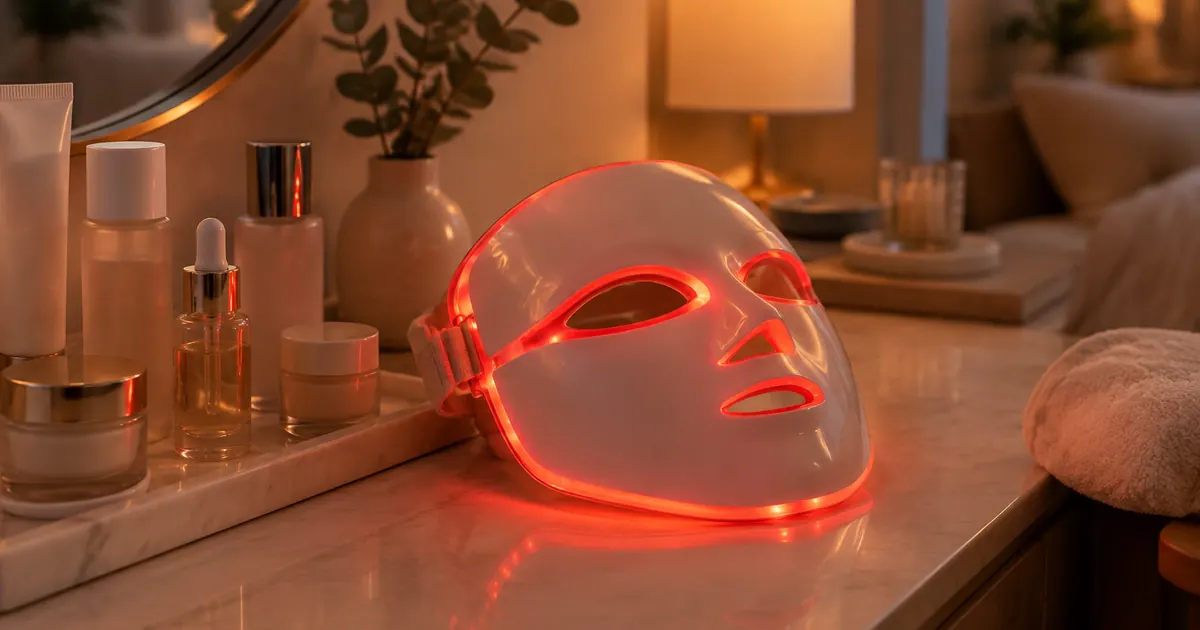
Most beauty gadgets are hope in a housing. LED masks are the exception with actual photobiomodulation research behind them — decades of it, originally in clinical and sports-medicine settings. But the gap between the research and the results on your bathroom counter is habit, expectations, and knowing which colors do what. This guide covers all three, from the team that wears one while reading.
The Colors, Honestly
Red light (around 630–660nm) is the workhorse: it supports collagen production, calms inflammation, and is the setting behind most before-and-after photos. Blue light (around 415nm) targets the bacteria involved in breakouts. The remaining colors in a seven-color mask are combinations — the 7-Color LED Face Mask includes yellow for redness, green for pigmentation, and purple as a red-blue blend. The honest hierarchy: red and blue have the deepest research; the others are pleasant, plausible, and secondary.
What red light actually does
Red light does not force the skin to do anything — it gives mitochondria more energy to do what they already do, slowly. That is why results are measured in weeks and why the habit matters more than the device: three to five sessions a week, ten minutes each, for eight weeks before judging. The mask that gets worn is the one that works.
The Habit: Where Most Masks Fail
The most common failure is not the device — it is the routine that requires sitting still for twenty minutes with nothing to do. The fix is pairing: wear the mask while reading, answering email, or watching the show you already watch. The rechargeable mask is cordless precisely for this — ten minutes of red light while the coffee brews, three nights a week, beats an ambitious daily plan that dies in week two.
What Results to Expect, by Week
- Weeks 1–2: nothing visible. The skin is not changed yet; the habit is.
- Weeks 3–4: subtle changes — less morning redness, makeup sitting better.
- Weeks 6–8: the first results worth photographing: softer fine lines, calmer tone.
- Week 12: the full picture, and the point where the mask either earned its counter space or goes back (within the 30-day window for the skeptical).
Safety and Sensible Use
LED masks at these wavelengths are gentle — no UV, no burn risk at proper distances. The sensible rules: clean eyes with the included shields or keep them closed, start with shorter sessions to test sensitivity, and skip active breakouts of cold sores until healed. Anyone on photosensitizing medication should ask a dermatologist first — the same rule that applies to any light-based treatment.
Pairing With the Rest of the Routine
The Color Schedule, Made Practical
Seven colors invite overthinking, so here is the schedule our customers actually settle into: red light three nights a week as the base habit, blue light on breakout-prone evenings or weeks, and the secondary colors as mood-based extras — yellow after sun exposure, purple during breakout weeks as a red-blue blend. The mask's one-button cycle makes switching colors a five-second decision, which matters: a routine with friction dies, and a routine that is one press lives.
Building the Ritual, Not the Chore
The masks that survive are the ones attached to an existing habit: the ten minutes of red light while coffee brews, the blue-light session while the evening news plays, the mask worn during the skincare routine's waiting periods. The cordless design exists for this — no cord means reading, email, and the couch all work. Habit science and our customer reviews agree: pair the mask with something you already do nightly, and the eight-week results take care of themselves.
The Rest of the Wellness Shelf
The mask pairs naturally with the recovery and calm tools around it: the massage gun for the body, the ultrasonic diffuser for the room's mood, and the yoga mat for the movement between them. Together they form a ten-minute evening ritual that costs less than one spa visit a quarter — and unlike the spa, it shows up daily, which is the entire reason the results compound while the spa's do not.
LED plays well with everything: apply it to clean, dry skin before serums, and the light reaches the skin rather than the product. Red light before a retinol night is fine; blue light after cleansing is the acne pairing. The Wellness & Self-Care collection holds the mask alongside the massage gun and diffuser that round out the ritual — with free US shipping, tax-free pricing, and 30-day returns, because the only honest review comes at week eight.