The massage gun market is full of torque claims and attachment counts, and almost none of it predicts whether the device will still be used in March. What matters is simpler: whether the percussion is deep enough to matter, quiet enough to use during a show, and simple enough to become habit. This guide covers what percussion actually does, how to use it safely, and what separates the keepers from the drawer fillers.
What Percussion Actually Does
Percussion therapy sends rapid pulses into muscle tissue, and the honest effects are three: it increases local blood flow, it downregulates the muscle's tension (the "knot" releasing), and it blunts the pain-tension cycle that keeps a neck stiff for a week. It does not heal injuries, break up scar tissue in any dramatic sense, or replace sleep and stretching. What it does — reliably, in the moment — is turn a stiff morning neck into a working one in four minutes.
The desk-neck use case
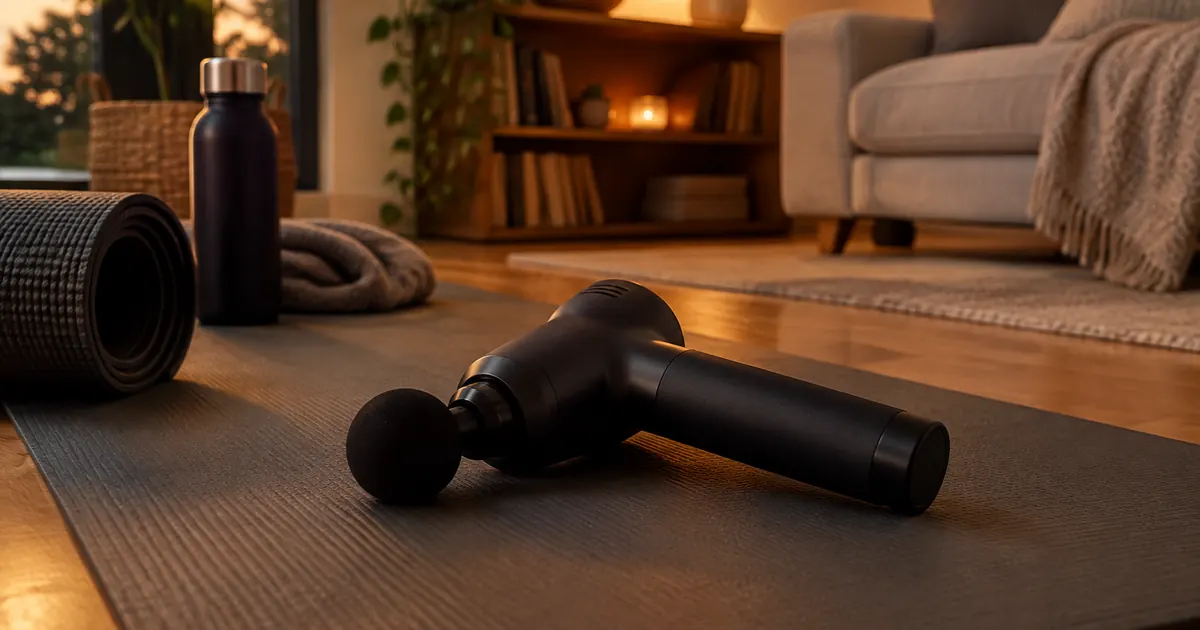
Most owners are not athletes; they are desk workers with the same four problem areas: neck, shoulders, lower back, and forearms. The Deep Tissue Massage Gun reaches all four with the ball and bullet heads, and the 10.5-inch frame reaches the mid-back spots that shorter handles cannot.
How to Use One: The Four-Minute Protocol
- Float, do not press. The gun does the work; pressing harder does not increase benefit, only bruising risk.
- Thirty seconds per muscle group, moving continuously in slow strokes — never parked on one spot, and never on bone or joint.
- Start on the lowest speed and step up until the muscle relaxes, not until it flinches.
- Before or after activity: ninety seconds pre-workout to wake a muscle up, two to three minutes after to move recovery along.
The Settings That Matter
Speed levels matter more than attachment counts. Five or six speeds cover the real range — gentle for necks, firm for quads — and the difference between a useful gun and a toy is whether the lowest speed is genuinely gentle. Noise is the other keeper metric: a gun that sounds like a power tool gets used less, which is why the quiet deep-tissue frame matters — it runs under the volume of the television.
Where It Fits: Training and Desk Life
The honest schedule from our own team: pre-workout, ninety seconds on the day's target muscles. Post-workout, three minutes on whatever worked hardest. And the unscheduled use that justifies the price — the 2 pm neck, the morning-after legs, the forearms after a long typing day. A gun used in all three slots earns its shelf; a gun bought for post-gym alone becomes a coat hanger by February.
Safety, Compressed
Skip bone, joints, the spine itself, and the front of the neck. Bruising means too much pressure or too long on one spot. Pregnancy, blood thinners, and recent injuries deserve a doctor's input first — the same rule as any deep-tissue work. Follow those lines and the risks are essentially zero.
Battery Life and the Travel Question
The honest battery math: a massage gun used four minutes a day charges weekly, and the deep-tissue frame's lithium pack holds that rhythm for years. For travel, the gun rides in carry-on (the battery is flight-legal) and covers the hotel-room neck that planes specialize in creating. Pair it with the 10,000mAh power bank and the travel recovery kit is two devices and zero hotel-gym memberships.
The Attachment Question, Answered Simply
Attachment counts are marketing; attachment shapes are not. The ball head covers large muscle groups — quads, glutes, shoulders. The bullet head digs into knots and the feet. The flat head is the generalist for arms and calves. Two attachments cover ninety percent of use; six are a nice bonus, not a buying criterion. The deep-tissue gun ships with the full set, and the honest advice is to learn the ball first — it is the attachment that will do most of the work.
Pairing With Movement
Percussion works best as a bridge, not a substitute: two minutes on the hamstrings before stretching does more than either alone, and the natural rubber yoga mat is the other half of the recovery shelf. The gun releases the tension; the mat retrains the range of motion. Households that pair them report the difference within two weeks — the stiffness that used to return by noon stops returning at all.
Our Wellness & Self-Care collection holds the gun alongside the yoga mat and LED mask that share the recovery shelf, with free US shipping, tax-free pricing, and 30-day returns — because the honest test is the second Tuesday, not the first.